

Hey there! As a supplier of NBR Seals, I often get asked about the rebound resilience of these little but crucial components. So, let's dive right in and explore what rebound resilience of NBR Seals is all about.
First off, let's understand what NBR is. NBR stands for Nitrile Butadiene Rubber. It's a synthetic rubber that's widely used in the sealing industry due to its excellent resistance to oil, fuel, and other chemicals. NBR Seals are found in a whole bunch of applications, from automotive engines to industrial machinery.
Now, onto rebound resilience. Rebound resilience is basically a measure of how well a material can return to its original shape after being deformed. When a force is applied to an NBR Seal, it gets compressed or stretched. But as soon as that force is removed, the seal tries to bounce back to its initial form. This ability to recover is what we call rebound resilience.
Why is rebound resilience so important for NBR Seals? Well, in many applications, these seals are constantly under pressure. For example, in an engine, the seals have to withstand the high - pressure environment created by the combustion process. If the seal doesn't have good rebound resilience, it won't be able to maintain a proper seal over time. It might get permanently deformed, leading to leaks. And leaks can cause all sorts of problems, like loss of fluids, reduced efficiency, and even damage to the equipment.
Let's take a closer look at how rebound resilience is measured. One common way is through the use of a rebound pendulum test. In this test, a pendulum is dropped onto the NBR Seal sample. The height to which the pendulum rebounds is measured. A higher rebound height indicates better rebound resilience. The test gives us a quantitative value that helps us compare different NBR Seal materials.
The rebound resilience of NBR Seals can be affected by several factors. Temperature is a big one. At low temperatures, NBR becomes stiffer, and its rebound resilience decreases. On the other hand, at high temperatures, the rubber can start to break down, also reducing its ability to rebound. So, it's important to choose the right NBR compound based on the operating temperature of the application.
Another factor is the formulation of the NBR. Different manufacturers use different additives and curing processes to make their NBR Seals. These can have a significant impact on the rebound resilience. For example, adding certain fillers can improve the mechanical properties of the rubber, including its rebound ability.
The cross - linking density of the NBR also plays a role. Cross - linking is the process where the polymer chains in the rubber are connected to each other. A higher cross - linking density generally leads to better rebound resilience, but it can also make the rubber more brittle. So, there's a balance that needs to be struck.
As a supplier, we understand the importance of providing NBR Seals with good rebound resilience. We work closely with our customers to understand their specific needs. Whether it's an application that requires high - temperature resistance or one that needs to operate in a chemical - rich environment, we've got the expertise to recommend the right NBR Seal.
Now, let's talk a bit about some of the other products we offer. We also have NBR Oil Seal Washers. These washers are designed to work in conjunction with our NBR Seals. They provide an extra layer of protection against leaks and help distribute the pressure evenly.
If you're looking for something different, we also offer Clear Silicone Washers. These are great for applications where you need transparency, like in some food - grade or medical equipment. And for applications that require high - performance sealing in extreme conditions, our Viton Flat Washers are a top choice. Viton is known for its excellent resistance to high temperatures and chemicals.
So, if you're in the market for NBR Seals or any of our other rubber products, don't hesitate to reach out. We're here to help you find the best solution for your specific requirements. Whether you need a small quantity for a prototype or a large - scale production order, we can handle it.
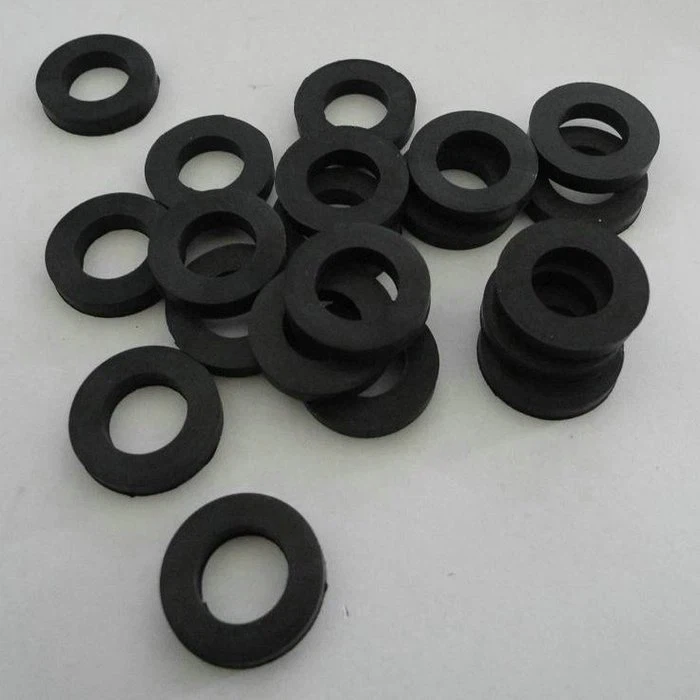

In conclusion, the rebound resilience of NBR Seals is a critical property that ensures their proper functioning in various applications. By understanding the factors that affect it and choosing the right NBR compound, you can ensure that your equipment runs smoothly and efficiently. If you have any questions or want to discuss your sealing needs, just get in touch. We're always happy to have a chat and find the perfect product for you.
References:
- "Handbook of Elastomers" by Allan N. Gent
- "Rubber Technology: Compounding, Vulcanization and Testing" by Werner Hofmann