

As a supplier of NBR washers, I've had numerous inquiries regarding the acoustic insulation performance of these essential components. In this blog, I'll delve into the science behind NBR washers' acoustic insulation capabilities, compare them with other types of washers, and explain how their performance can be optimized for various applications.

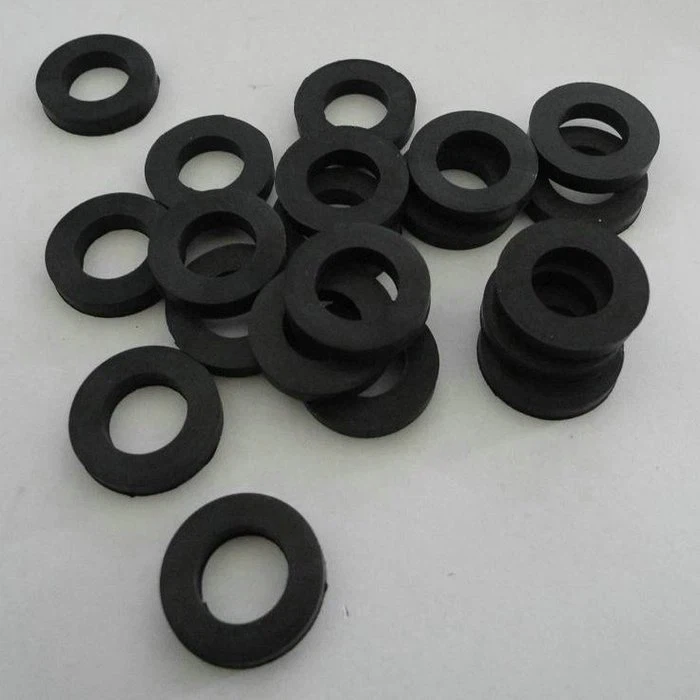
Understanding NBR Washers
NBR, or Nitrile Butadiene Rubber, is a synthetic rubber copolymer composed of acrylonitrile (ACN) and butadiene. This material is well - known for its excellent resistance to oil, fuel, and other chemicals, as well as good abrasion and tear resistance. NBR washers are widely used in automotive, industrial, and household applications due to their affordability and versatility.
Acoustic Insulation Basics
Acoustic insulation refers to the ability of a material to reduce the transmission of sound. Sound is a form of energy that travels through air or other media in the form of waves. When these waves encounter a material, they can be reflected, absorbed, or transmitted through it. Effective acoustic insulation materials are those that can absorb or reflect a significant portion of the sound energy, preventing it from passing through.
How NBR Washers Provide Acoustic Insulation
The acoustic insulation performance of NBR washers is primarily due to their viscoelastic properties. Viscoelastic materials exhibit both viscous and elastic behavior. When sound waves hit an NBR washer, the rubber's internal molecular structure allows it to deform in response to the sound energy. This deformation dissipates the sound energy as heat through internal friction, effectively absorbing the sound.
Additionally, the density of NBR washers plays a role in their acoustic insulation. Higher - density NBR washers are generally more effective at blocking sound transmission because they present a greater mass for the sound waves to penetrate. The mass - law principle states that the transmission loss of a material increases with its mass per unit area. So, by choosing NBR washers with an appropriate density, one can enhance their acoustic insulation capabilities.
Factors Affecting Acoustic Insulation Performance
- Thickness: Thicker NBR washers generally provide better acoustic insulation. As the thickness increases, the sound waves have to travel through more material, increasing the chances of absorption and dissipation of energy.
- Hardness: The hardness of NBR washers, typically measured on the Shore A scale, can influence acoustic performance. Softer NBR washers (lower Shore A values) tend to be more effective at absorbing sound because they can deform more easily in response to sound waves, allowing for greater energy dissipation.
- Temperature: The acoustic insulation performance of NBR washers can be affected by temperature. At lower temperatures, the rubber becomes stiffer, which may reduce its ability to absorb sound. Conversely, at higher temperatures, the rubber may become too soft, potentially reducing its structural integrity and acoustic performance.
Comparison with Other Types of Washers
When considering acoustic insulation, it's useful to compare NBR washers with other types of washers such as Polyurethane Washers, Viton Flat Washers, and FDA Silicone Washers.
- Polyurethane Washers: Polyurethane is known for its high - performance mechanical properties. In terms of acoustic insulation, polyurethane washers can offer good sound absorption, especially in applications where high - frequency noise needs to be reduced. However, they may be more expensive than NBR washers and may not have the same level of chemical resistance.
- Viton Flat Washers: Viton is a fluoropolymer elastomer known for its excellent chemical resistance, especially to high - temperature fluids and aggressive chemicals. While Viton washers can provide some level of acoustic insulation, their main advantage lies in their chemical and heat resistance rather than their acoustic performance.
- FDA Silicone Washers: FDA - compliant silicone washers are often used in food and beverage applications. They have good flexibility and can provide some acoustic insulation, but they may not be as effective as NBR washers in high - noise environments due to their relatively lower density and viscoelastic properties compared to NBR.
Applications of NBR Washers for Acoustic Insulation
- Automotive Industry: NBR washers are used in automotive engines, transmissions, and exhaust systems to reduce noise and vibration. They can be placed between engine components, such as the engine block and the transmission, to dampen the sound generated by the engine's operation.
- Industrial Machinery: In industrial settings, where large machinery can generate significant noise, NBR washers can be used to isolate vibrating parts and reduce noise transmission. For example, they can be installed between motors and their mounting brackets to prevent the transfer of vibration - induced noise.
- Household Appliances: NBR washers are also used in household appliances such as washing machines, dryers, and refrigerators. They help to reduce the noise generated by the appliance's moving parts, providing a more quiet and comfortable living environment.
Optimizing the Acoustic Insulation of NBR Washers
To get the best acoustic insulation performance from NBR washers, the following steps can be taken:
- Proper Selection: Choose NBR washers with the appropriate thickness, hardness, and density based on the specific acoustic requirements of the application.
- Installation: Ensure that the NBR washers are installed correctly. A proper fit and tight seal can enhance their acoustic performance by preventing sound leakage around the edges.
- Combination with Other Materials: In some cases, combining NBR washers with other acoustic insulation materials, such as foam or felt, can further improve the overall acoustic performance.
Conclusion
In conclusion, NBR washers offer a cost - effective and versatile solution for acoustic insulation. Their viscoelastic properties, combined with their appropriate density and thickness, allow them to effectively absorb and dissipate sound energy. While they may not be the best option for every acoustic application, they are well - suited for a wide range of industries and environments.
If you are looking for high - quality NBR washers with excellent acoustic insulation performance, we are here to help. Our team of experts can assist you in selecting the right washers for your specific needs. Whether you are in the automotive, industrial, or household appliance sector, we have the products and knowledge to meet your requirements. Feel free to contact us to start a procurement discussion and find the best NBR washers for your acoustic insulation needs.
References
- "Rubber Materials and Their Applications" by John W. S. Hearle.
- "Acoustics: An Introduction" by Neville H. Fletcher and Thomas D. Rossing.
- Manufacturer's technical data sheets on NBR, polyurethane, Viton, and silicone rubber materials.